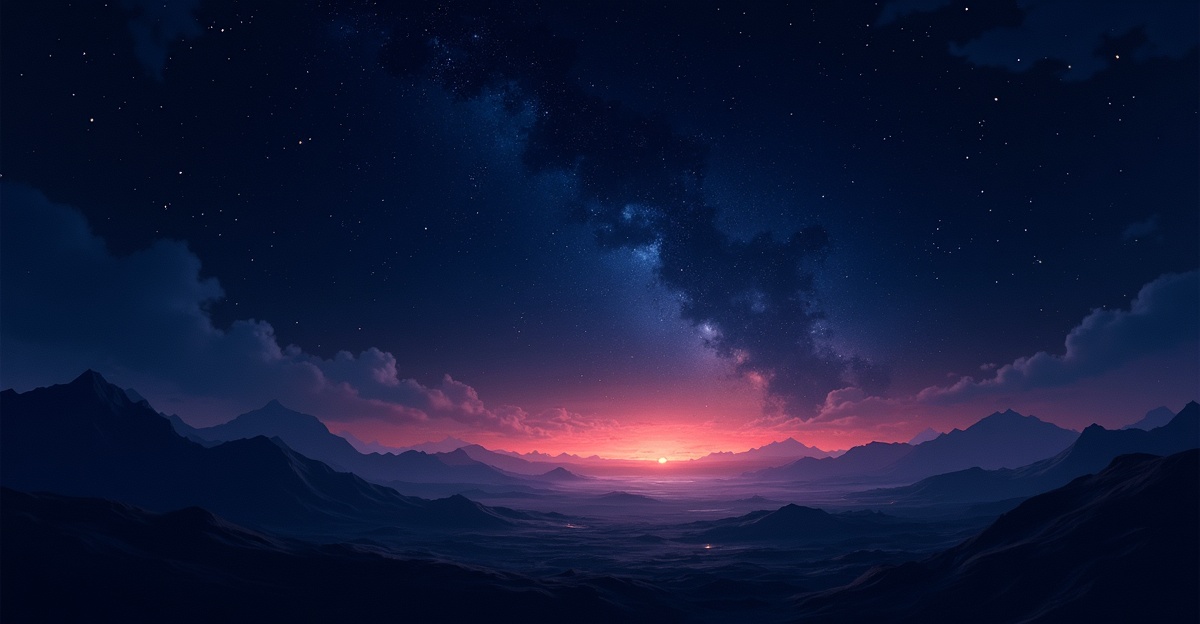
Imagine standing beneath a sky punctuated by a trillion stars, yet most of it remains mysteriously dark. You might expect an infinite universe filled with stars to glow like a cosmic disco ball all night long. But here’s where things get interesting: the universe is playing a celestial magic trick. 🌌
First, consider the light itself. Starlight, traveling vast distances across space, takes millions or even billions of years to reach us. During this epic journey, the universe is not just sitting still. It's expanding. This expansion stretches the light waves like taffy, shifting them from the vibrant visible spectrum into the invisible infrared—a process known as redshift. The result? Those faraway stars are effectively rendered invisible to our eyes. 📡
Now, think about space-time, the very fabric of the universe. As it swells, it creates more and more cosmic real estate. These expanding stretches are vast, and in some places, so great that light hasn't even reached us yet, or never will. This cosmic dance results in the inky blackness we see overhead.
The dark night sky is a testament to the dynamic nature of our universe. It's not a void, but a vibrant, ever-changing expanse filled with mysteries.
Tag someone who needs to know this. 🌠
Enjoyed this? Follow for more: